
Rail · Adelaide & South Australia
Rail medicals in Adelaide — Cat 1, Cat 2 and Cat 3
Category 1, 2 and 3 assessments carried out under the National Standard for Health Assessment of Rail Safety Workers, by an Authorised Health Professional, at clinics in Mile End and Salisbury Downs.
Which category do you need?
Your category is set by your role, not by you — your employer or rail transport operator will tell you which one applies. If you are not sure, call and we will work it out before you come in.
These go by a few names — rail medicals, railway medicals, rail safety worker health assessments, or just “a cat 1” or “a cat 3”. They are the same thing.
Also due for a commercial driver medical? Both can be done in the same visit.
Safety critical — highest risk
Category 1 (Cat 1)
Train drivers, train operators and track machinery and plant operators. The most thorough of the assessments: cardiovascular risk, vision, hearing and, where indicated, sleep-disorder screening.
Safety critical — with a second line of defence
Category 2 (Cat 2)
Safety critical work where, if you were suddenly taken ill, another person is usually available to prevent a catastrophic event — signallers, train controllers, and staff working on platforms. That backstop is what separates Category 2 from Category 1.
Around the track — non-safety critical
Category 3 (Cat 3)
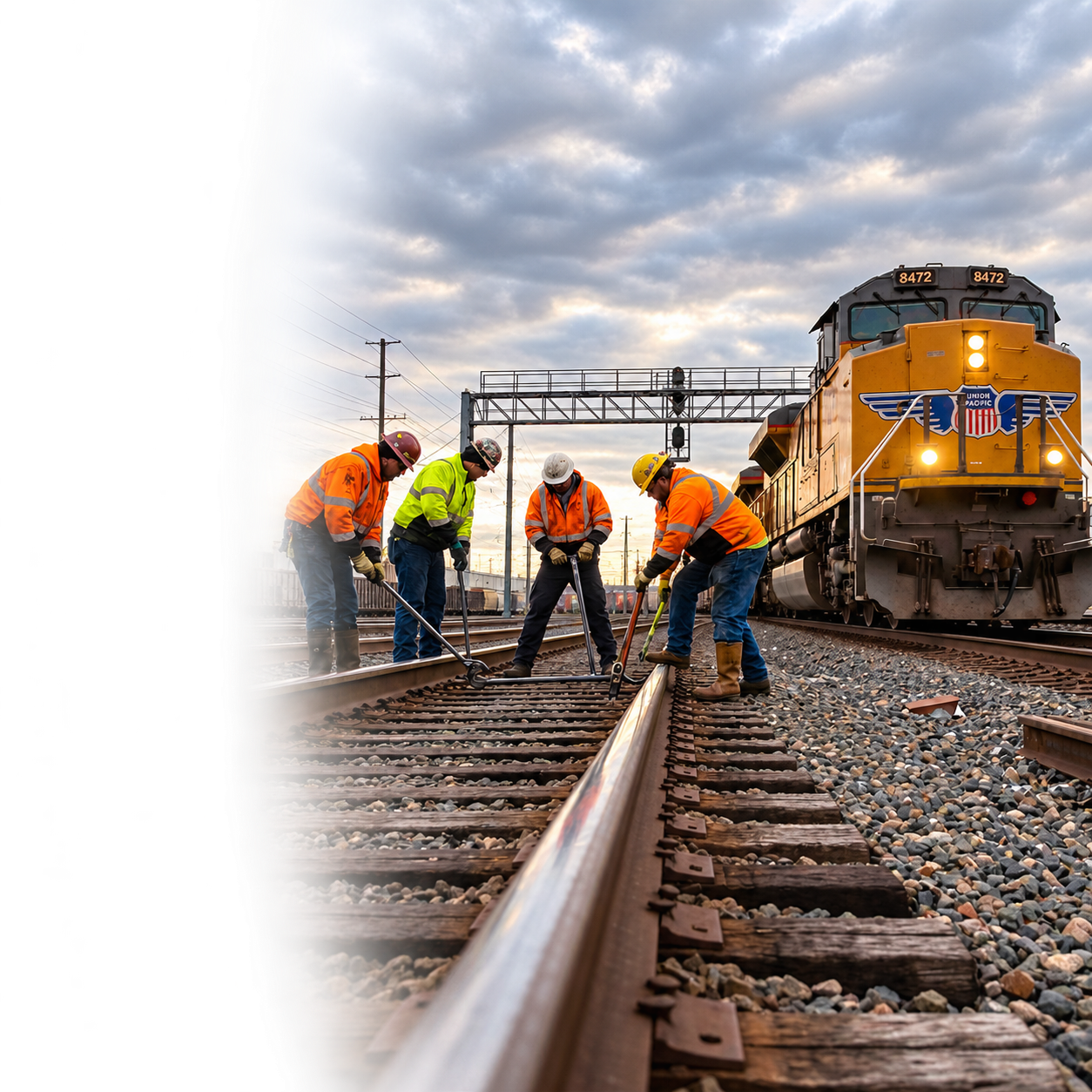
Around the Track Persons: workers who need to be safe in the rail corridor rather than operating within the safety system — track-side staff, maintenance, cleaning and contractors.
Types of assessment
Pre-employment
Before starting a rail safety role, to confirm fitness against the category the role requires.
Periodic
At the interval set by your category and age, to maintain certification. Bring your previous assessment date if you know it.
Triggered
After an injury, illness, new diagnosis, medication change or incident that could affect fitness for duty.
What to bring
- Photo identification
- Your glasses or contact lenses, if you wear them
- A list of your current medications
- Any hearing aids you use
- The category your role requires, if you know it
- Details of your previous assessment, if this is a periodic
Common questions
- What is a Cat 3 rail medical?
- A Category 3 assessment is for Around the Track Persons — people who need to be safe working in or near the rail corridor, but who are not operating within the rail safety system itself. Track-side workers, maintenance crews, cleaners and contractors usually fall here. It is the most common rail medical by a wide margin.
- What is the difference between Cat 1, Cat 2 and Cat 3?
- It comes down to what happens if you were suddenly taken ill at work, and whether anyone is positioned to stop it becoming a disaster. Category 1 is the highest-risk safety critical work — train drivers and operators, track machinery and plant — where there is no one else able to intervene. Category 2 is safety critical work where another person is usually available to prevent a catastrophic event, such as signallers, train controllers and platform staff. Category 3 is for everyone who simply needs to be safe around the track rather than working inside the safety system.
- How do I know which category I need?
- You usually do not, and that is normal. Your category is determined by your role and is set by your employer or the rail transport operator, not by you or by us. If you are not sure, ring before you book and we will work it out — it is a common call and it saves you doing the wrong assessment.
- What happens in the assessment?
- A health questionnaire and history, a physical examination, and testing appropriate to your category — which can include vision, hearing, and other assessments where the standard requires them. Bring your glasses or hearing aids if you use them, a list of your medications, and any relevant specialist letters.
- What if I do not meet the standard?
- Not meeting a standard on the day is not automatically the end of it. Some findings need more information, a specialist opinion, or a review once something is treated or stable. You will be told plainly what the issue is, what it means for your category, and what the realistic options are.
- Who receives the result?
- The rail transport operator or employer who required the assessment receives the outcome — that is how these assessments work, and you should know it before you attend rather than afterwards. What is shared is the fitness outcome and the information relevant to it, not your entire medical history.